Emergency vet, urgent care or your regular vet: where to go
By Dana Whitfield · Updated 2026-08-27
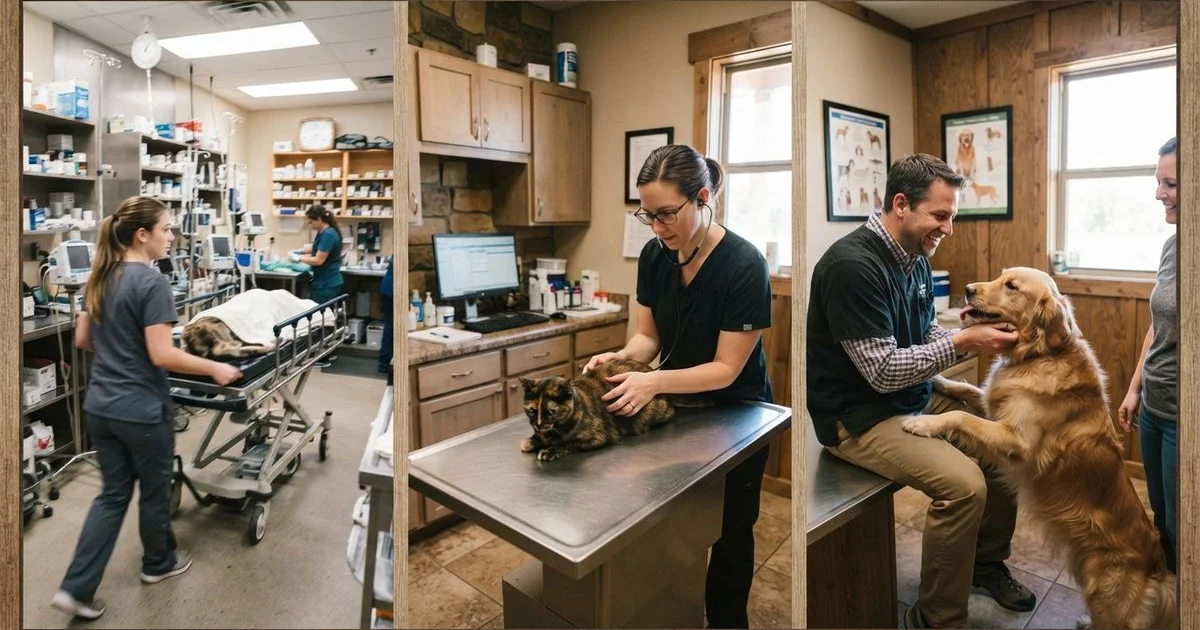
This is general information, not veterinary advice. If you think your pet’s life is at risk, go to the nearest emergency hospital now.
Most people searching for an emergency vet at 9 p.m. have a worried pet, not a clear diagnosis. The useful question is which of three kinds of clinic fits what is happening. The emergency and 24-hour vets in our directory include both full hospitals and walk-in urgent care.
The three options
| Option | Best for | Limits |
|---|---|---|
| Regular vet (office hours) | Problems that started today and your pet is stable | Closed nights and many weekends; may refer out |
| Urgent care vet | Same-day problems that are not life-threatening, often evenings or weekends | No overnight hospitalization or complex surgery |
| 24-hour emergency hospital | Trauma, breathing trouble, poisoning, seizures, surgery | Highest cost; waits can be long when triage is busy |
Our reviews back up the trade-off. Walk-in urgent care clinics are praised for quick intake and clear cost conversations, and one reviewer reported urgent care costing up to 40% less than an emergency vet (see what an emergency vet visit costs). Emergency hospitals get credit for thorough diagnostics, but reviewers also describe longer waits when several critical cases arrive together.
How triage decides the wait
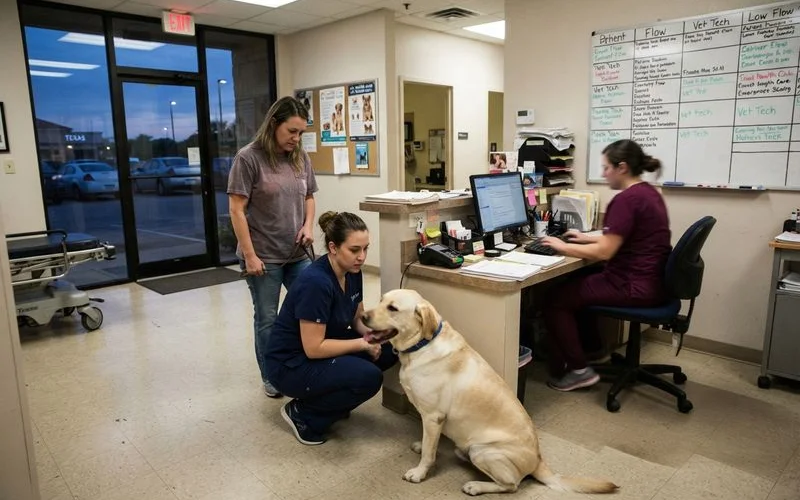
Emergency staff rank patients by urgency, not arrival time. This is called triage. A stable pet with an upset stomach can wait behind a pet that cannot breathe, and that is a good system, even if it feels slow from the lobby. Telling the front desk about every symptom helps, so does mentioning anything your pet may have eaten.
A quick way to choose
Ask three questions:
- Is my pet’s breathing, consciousness or bleeding the issue? Go to the emergency hospital.
- Did my pet eat something possibly toxic? Call an emergency clinic or poison hotline on the way. Do not wait for symptoms.
- Is it stable but worrying (limping, mild vomiting, ear pain) and it is after hours? Urgent care is a reasonable first stop if one is open.
If it is during office hours and your pet is stable, call your regular vet first. They know your pet’s history and may see you the same day.
What to bring and say
- Your pet’s vaccine and medication list, or the clinic name that holds the records.
- A photo of any packaging if your pet ate something.
- A short timeline: when it started, what changed, any prior conditions.
- A payment method, and a request for a written estimate.
Plan before you need it
Find the nearest 24-hour hospital and the nearest urgent care now and save both numbers. Confirm hours by phone, since they change. Keep your pet’s records somewhere you can reach from your phone. Learn the first sign your pet’s normal looks like, so you can tell when something is off. The directory home makes it easy to compare by location and hours, and you can see how we rate in how we score.
FAQ
- Should I call before going to an emergency vet?
- If your pet is stable, yes. A short call confirms they are open, can see your pet's species and may tell you what to do on the way. If your pet is in obvious distress, go and call from the car.
- Can my regular vet handle an emergency?
- During office hours many can see urgent cases or fit them in, but they may refer you onward if your pet needs surgery or monitoring.
- What is the difference between urgent care and an ER?
- Urgent care covers problems that need same-day attention but are not life-threatening. A 24-hour ER staffs for critical cases, surgery and overnight stays.
- Does a 24-hour sign mean someone is always there?
- Not always. Hours vary, so confirm by phone before driving across town.