How to read a vet estimate and avoid billing surprises
By Dana Whitfield · Updated 2026-08-24
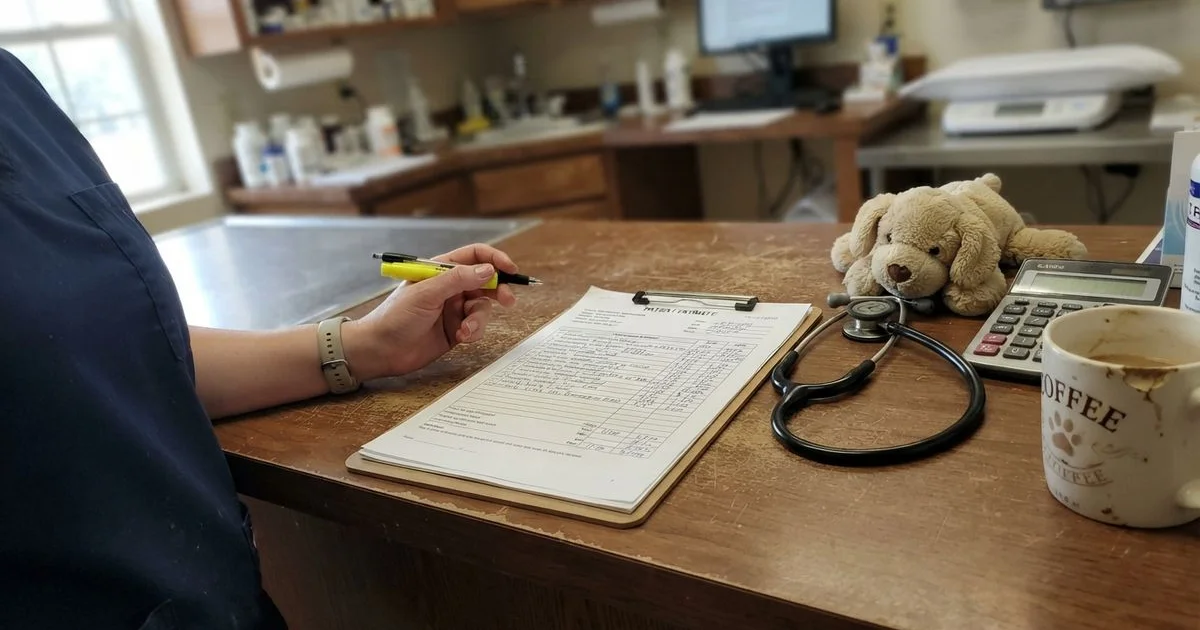
Billing confusion shows up again and again in the complaints we read about vet clinics: final bills above the first estimate, unclear fees, surprise add-ons. It is rarely about one dramatic overcharge. It is usually about nobody explaining the lines. This guide covers how to read an estimate so that does not happen to you.
The clinics that earn praise in reviews tend to do one thing consistently: they explain treatment options and costs before work starts. You can nudge any clinic toward that. For how we treat these themes, see how we score.
The usual sections of an estimate
| Section | What it covers | What to ask |
|---|---|---|
| Exam | The vet’s time and physical assessment | Is it separate from the procedure fee? |
| Diagnostics | Bloodwork, x-rays, ultrasound, urinalysis | Which are needed to decide treatment? |
| Procedure | Surgery, dental work, wound care | Does the price include anesthesia and monitoring? |
| Hospitalization | Overnight stay, fluids, nursing | What is the daily rate? |
| Medications | Take-home drugs and injections | Can I fill the prescription elsewhere? |
| Fees | Biohazard, after-hours, late arrival | When are these charged? |
Where bills tend to grow
Reviewers describe a few patterns. An estimate starts low and is revised upward once tests are done. Optional add-ons are bundled in without being flagged as optional. Medications cost more than the same drug elsewhere. Per-visit fees are applied each time during ongoing treatment. A late-arrival fee turns up on the invoice. None of this is necessarily improper, but every one of them is easier to handle if you hear about it first.
Questions to ask at the front desk
- Is this a fixed price or an estimate? What could change it?
- Will you call me before the total goes over a number I set?
- Which items are essential today, and which are recommended for later?
- Are there fees that apply even if I decline something?
Then write the answers on the estimate. A short note with the date and the name of the person you spoke with settles most disagreements later.
Anesthesia and dental estimates deserve extra care
These are the estimates where scope varies most. Pre-anesthetic bloodwork, monitoring and pain control are not luxuries, so an unusually low price is worth a question about what is left out. Dental estimates often change once the vet can see the whole mouth, since extractions cannot be priced in advance. Ask how the clinic will contact you mid-procedure and what the approval limit is.
Getting a second estimate
For anything large, it is fair to ask for a written estimate and take it to another clinic. Reviewers who did this report gaps of 40% to 50% on some orthopedic quotes, though that is a single account and results vary. A second opinion should compare like with like: same procedure, same inclusions. Do not delay care in a true emergency to shop around.

When you are choosing a clinic in the first place, the directory home shows rating and review themes side by side.
This is general information, not financial advice.
FAQ
- Is a vet estimate a fixed price?
- Usually not. It is a projection based on what the vet expects to do. Findings during treatment can change it, so ask to be called before the total passes a set amount.
- Why does the estimate show a low and a high number?
- The range covers different paths, for example whether a procedure stays simple or needs extra time and supplies. Ask what pushes the bill to the high end.
- Can I decline items on the estimate?
- Generally yes, though some items are needed for safe anesthesia. Ask the vet to mark each line as essential, recommended or optional.
- What should I do about a charge I do not understand?
- Ask for an itemized invoice and call the practice manager. Doing it before you pay is easier than after.