Pet end-of-life care: making the decision and planning the day
By Dana Whitfield · Updated 2026-09-25
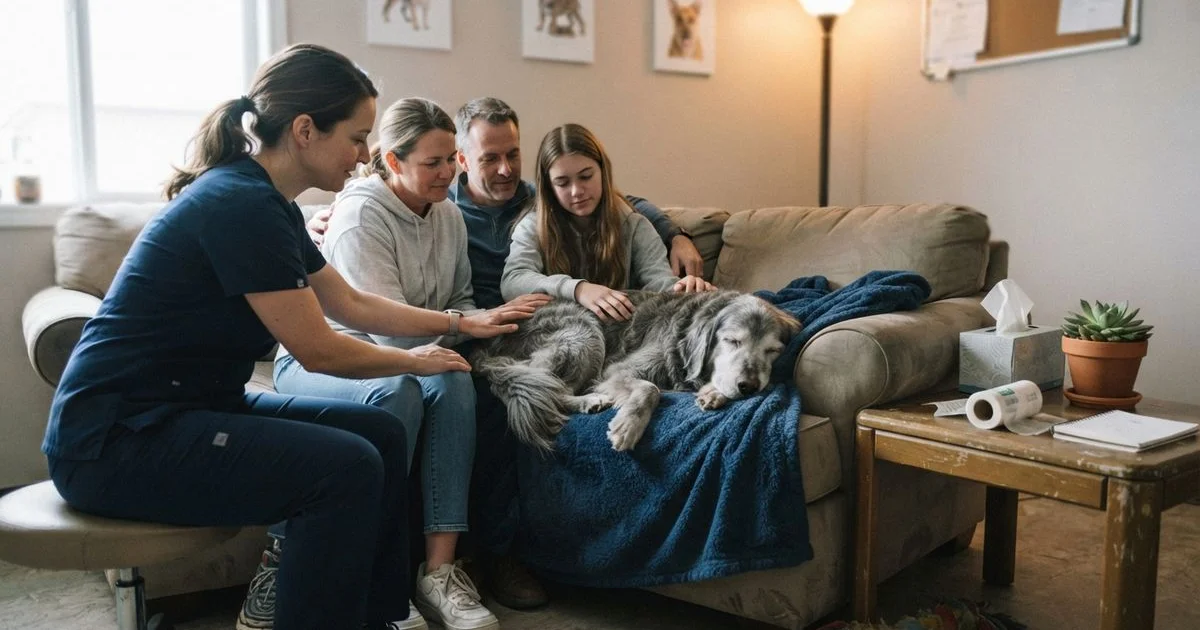
This is general information, not veterinary advice. Your vet knows your pet and can help you decide.
Few decisions are harder. Searches for home pet euthanasia in Austin are steady, which tells us many families are facing this question and looking for calm information. This guide is about the decision and the planning. It does not replace a conversation with your vet.
Start with quality of life
Vets often suggest simple tools: a calendar marking good and bad days, a list of your pet’s three or five favorite things and whether they still enjoy them, and notes on pain, appetite, breathing and mobility. If bad days outnumber good ones, or your pet no longer does the things that made them themselves, that is information. Ask your vet for an honest read. Reviewers describe compassionate, patient end-of-life care as one of the most valued things a clinic can offer.
Palliative and hospice care
If your pet has a terminal illness, hospice or palliative care aims at comfort, with pain relief, appetite support and a calm home. It can give you time, with no promise of how long. The glossary has a short definition. Ask what the plan will be when comfort care stops being enough.
Where it can happen
| Option | What to know |
|---|---|
| At home | Quiet and familiar; usually a call-out fee; scheduling needs notice |
| At your regular clinic | Familiar team; some offer a quiet room or after-hours slot |
| At an emergency clinic | Available when it cannot wait; less time to prepare |
Our mobile and house-call vets include practices that do home visits. The mobile vet versus clinic comparison covers what a home visit can and cannot do. We have little reliable price data for it, so ask for the full cost in advance, including any aftercare. How we approach price mentions is on how we score.
Questions to ask the vet
- Will my pet be sedated first, and how does the process work?
- How long will the visit take?
- What are the aftercare options, cremation or burial, and what do they cost?
- Can I stay with my pet the whole time?
- Can I plan for other pets or children to be present or not?
Planning the day
Choose a comfortable place and time. Some people give a favorite meal or a quiet walk. Bring a blanket, a toy and anything that keeps your pet at ease. Decide beforehand who will be there. Arrange a ride if you do not want to drive afterward, and take time off if you can. Ask whether the vet can take a paw print or fur clipping.
Other pets and children
Other pets may benefit from seeing or sniffing the body, though not every vet will agree. For children, plain language works better than euphemisms. Let them take part in goodbyes if they want to.
Looking after yourself
Grief after a pet’s death is real, and it is fine to take time. Talking with friends or a pet loss support service can help. If you need to leave a decision for a day, ask your vet what comfort measures can cover the gap.
When you need to find a clinic, the directory home can help you compare.
FAQ
- How do I know when it is time?
- There is no single sign. Many vets suggest tracking good days and bad days and looking at appetite, mobility, pain and enjoyment. Your vet can help you assess quality of life.
- What is the difference between hospice and euthanasia?
- Hospice or palliative care focuses on comfort during a terminal illness. Euthanasia is a decision to end suffering. They can happen in sequence.
- Can this be done at home?
- Yes, many Austin vets offer it. Ask about sedation, what the visit involves, and aftercare options.
- Should children be present?
- It depends on the child and the family. Honest, age-appropriate explanation matters more than a rule.