How often your pet needs a checkup and vaccines in Austin
By Dana Whitfield · Updated 2026-09-08
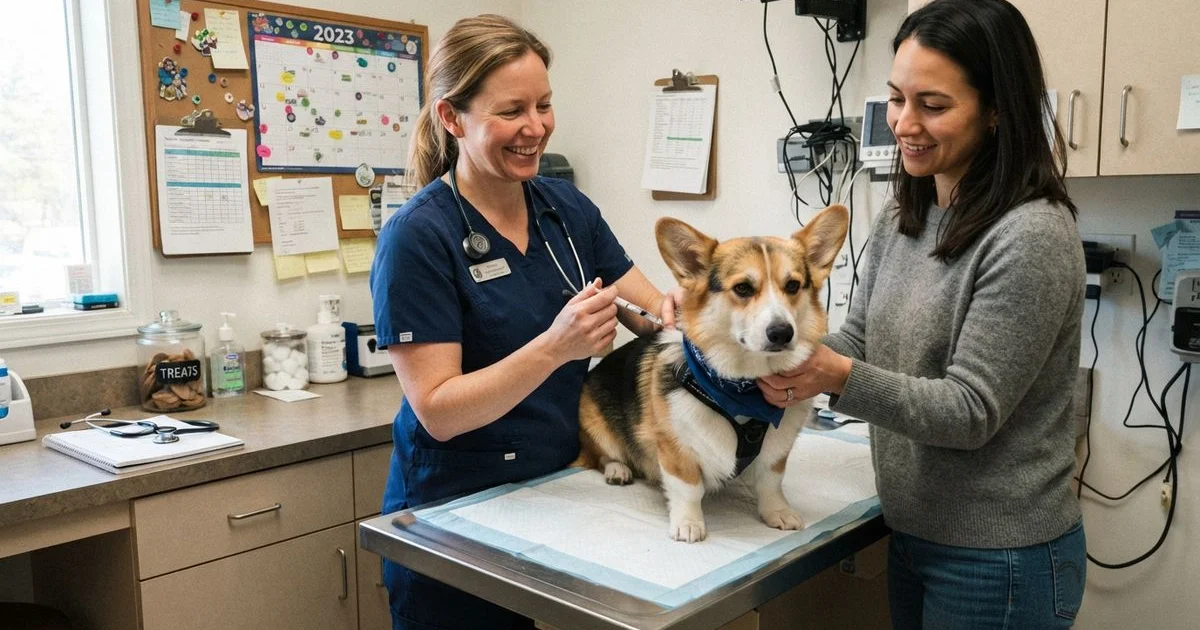
This is general information, not veterinary advice. Your vet decides what your pet needs and when.
Pet owners usually ask how often, and the honest answer depends on age and health. What follows is the common rhythm most clinics follow, so you can plan a year and not wait for something to go wrong. Most routine care happens at a general practice vet.
The usual rhythm by life stage
| Life stage | Typical visit pattern | What happens |
|---|---|---|
| Puppy or kitten | Several visits in the first months | Vaccine series, deworming, growth checks, spay or neuter planning |
| Healthy adult | About once a year | Wellness exam, vaccine boosters as due, parasite testing |
| Senior | Often twice a year | Bloodwork, weight and joint checks, early disease screening |
| Pet with a condition | As your vet directs | Monitoring and medication adjustments |
Reviews give a sense of cost: one account described basic shots and a heartworm test at over $330 and called that typical for Austin, while another paid around $700 for two dogs’ annual physicals without vaccines. Those are individual reports, not benchmarks. See how we score for how we handle price mentions.
Core and lifestyle vaccines
Vets generally divide vaccines into core ones recommended for nearly every pet, and non-core ones chosen by exposure. A dog that goes to daycare, boards or visits dog parks may be advised on additional vaccines like Bordetella, and risk-based ones such as leptospirosis may come up in some areas. Cats who go outdoors differ from indoor-only cats. Ask your vet to explain why each shot is recommended for your pet, and to write down the schedule.
Our glossary explains several of the underlying terms, such as core vaccines, parvovirus and Bordetella, in short definitions. This guide is about timing and planning.
Parasite prevention
In a warm, mosquito-friendly place like Austin, many vets recommend year-round heartworm prevention along with flea and tick control. A yearly heartworm test is commonly part of the annual visit for dogs. One reviewer found a six-month supply of preventive online for far less than in-clinic, so ask for a prescription if you want to shop. Do not give any product without checking it is safe for your species and weight.
What an annual visit covers
- A nose-to-tail physical exam.
- Weight and diet review.
- Vaccines that are due.
- Parasite testing and prevention.
- Dental check, since dental disease is common and often hidden.
- Behavior and mobility questions.
Annual exams are also when a vet notices small changes. Early detection often means simpler treatment, but no vet can promise an outcome.
Between visits
Call sooner for appetite changes, repeated vomiting, limping, bad breath, new lumps, drinking or urinating more, or behavior changes. In summer, watch for heat stress. Keep records in one place so a new clinic or an emergency team can see your pet’s history quickly.
Making it affordable
Spread costs by asking about wellness plans. One reviewer mentioned a cat plan at around $80 a month. Compare what the plan includes before you commit, and see whether it actually saves money against paying per visit. Some clinics discount new-client exams.

Start your search from the directory home when you need a clinic to set up a yearly schedule.
FAQ
- How often should a healthy adult dog or cat see the vet?
- Commonly once a year, with more frequent visits for puppies, kittens, seniors and pets with health conditions. Your vet sets the schedule.
- Do indoor cats need vaccines?
- Usually some. Core vaccines are recommended broadly, and your vet can tell you which others make sense for your cat's lifestyle.
- Does Austin's climate change anything?
- Mosquito-borne heartworm and year-round parasites are reasons many vets recommend consistent prevention. Heat safety matters too.
- Do I need a Bordetella vaccine?
- Boarding, daycare and grooming facilities often require it. Check the facility's rules and ask your vet.